Corsets
Origins: Function Before Fashion (1500s–1600s)
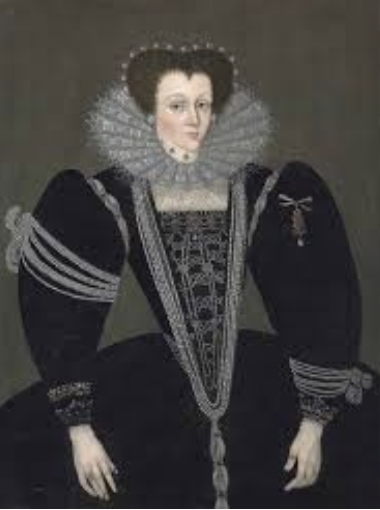
In the Renaissance era, corsets—often called stays—were worn by both men and women to shape the torso. Tailors and artisans crafted them from layered fabric, linen, or canvas, stiffened with wood, bone, or leather. The goal was not dramatic shaping but support: a stable posture for heavy, elaborate garments and a silhouette that reflected the era’s sculptural ideals.
These early corsets were labor-intensive works of craft, made by expert makers who understood structure and human form, laying the groundwork for centuries of refinement.
The Baroque and Rococo Shift: Decoration Meets Structure (1700s)
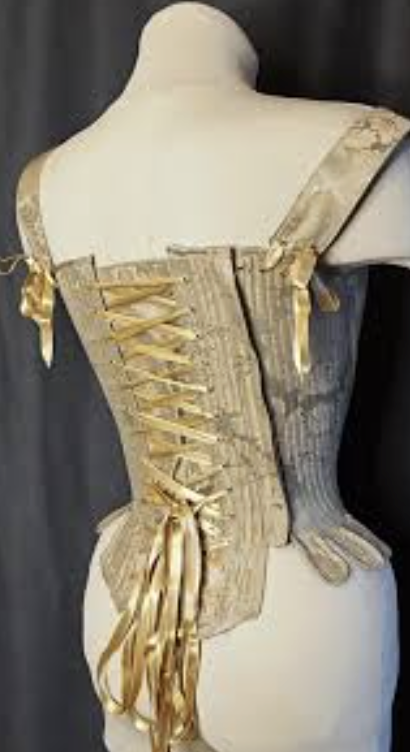
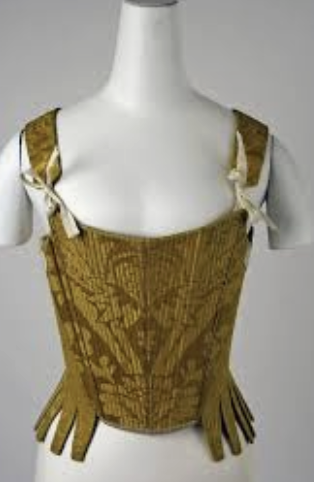
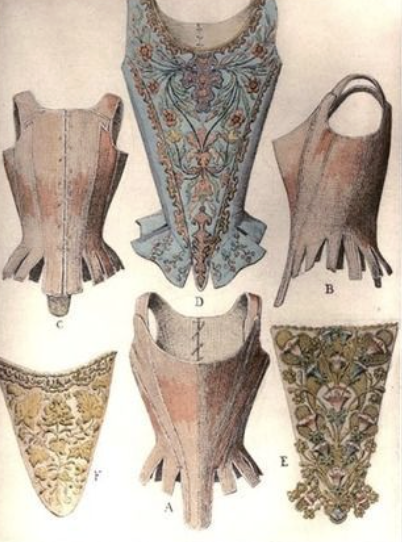
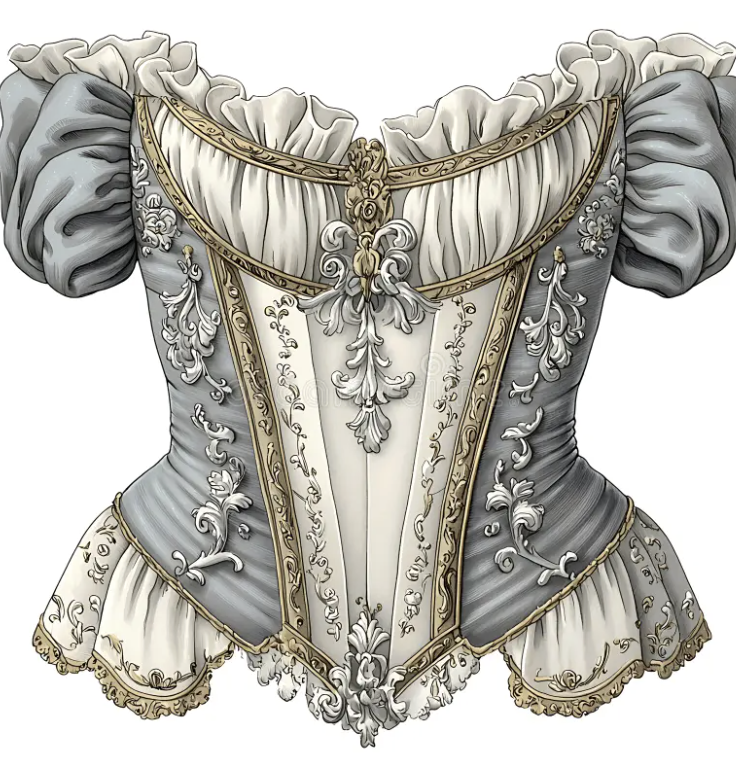
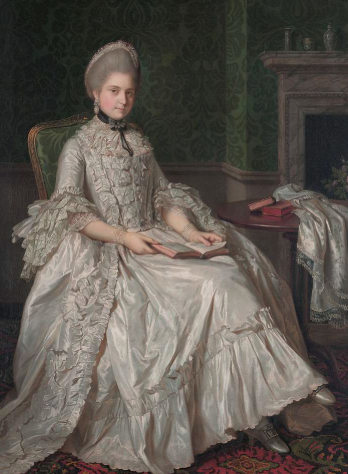
By the 18th century, corsets became more decorative and closely associated with social status. French and English court fashions layered rich fabrics and embroidery over structured stays that defined a conical torso. Corset makers had to be both seamstresses and engineers, balancing beauty with the changes in body silhouette that fashion dictated.
At this time, the corset wasn’t just undergarment—it was central to a woman’s wardrobe and visible in silhouette even through outer garments.
Victorian Era: The Corset as Cultural Symbol (1800s–1900s)
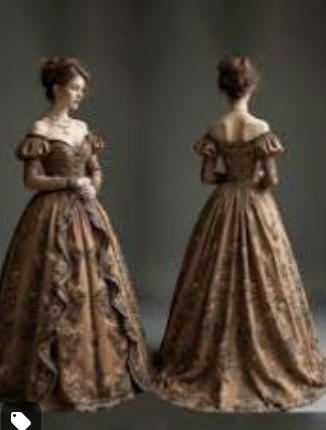
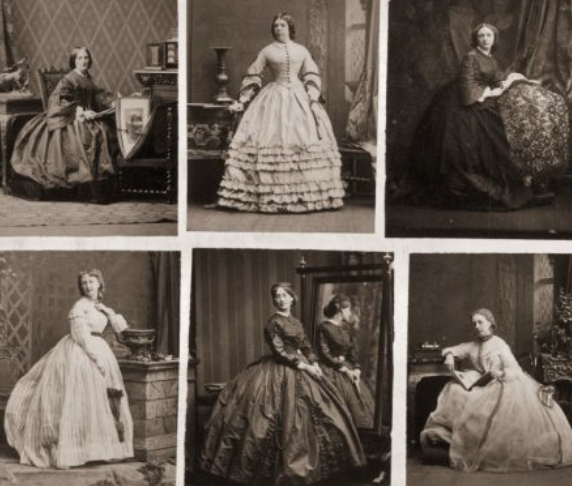
The 19th century was the golden age of corsetry. With the rise of industrialization, new materials like whalebone (baleen) and later steel boning allowed corsets to exert more shaping power. The ideal silhouette—tiny waist, full bust, and hips—pushed corset makers to innovate and refine patterning and construction techniques.
Corsets became deeply tied to ideals of femininity and moral conduct. They were seen as a sign of refinement—but also, increasingly, a symbol of constraint. Women’s reform movements challenged extreme tightlacing, and alternatives like liberation dress reform garments emerged.
20th Century: Decline, Reinvention, and Revival
With the rise of modern undergarments in the early 20th century—bra and girdle systems—the traditional corset lost dominance. By the 1920s, the flapper aesthetic favored a softer, less restricted silhouette.
Yet corsets never disappeared. They evolved:
1950s–60s: The hourglass silhouette returned in mainstream fashion.
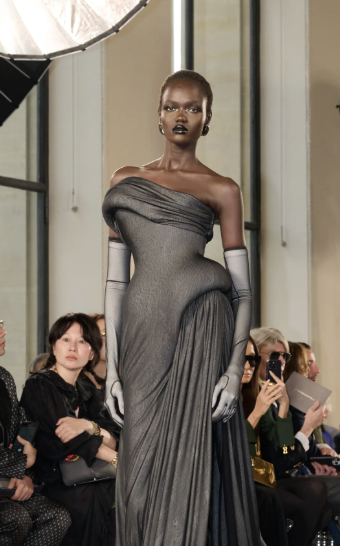
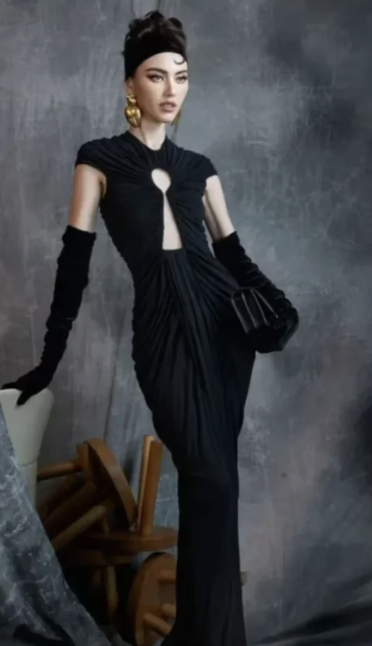
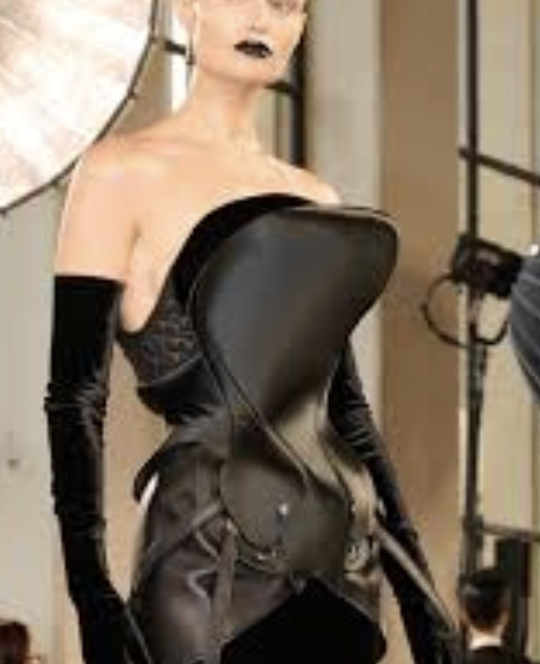
Late 20th–21st century: Designers such as Jean Paul Gaultier, Vivienne Westwood, and many contemporary couturiers revived corsetry as outerwear and statement pieces. Corset making transformed again into a craft of artistry and conceptual fashion.
Craft and Technique: What Makes a Corset?
Corset making blends architecture, anatomy, and aesthetics. Traditional corsets require:
A patterned foundation designed to shape and support the body
Multiple panels of strong fabric like coutil
Channels for boning (historically baleen; later steel)
Lacing back or front for adjustability
Precise fitting and pressure balance
Every corset is custom—or was custom—because each body has a unique structure and requires different support.
Why Corsets Matter Today
Corsets reveal much about fashion and culture:
How societies define beauty
The negotiation between comfort and form
The craftsmanship of garment construction
Today, corset making is both:
A technical skill valued in costume, tailoring, and couture
A source of empowerment for many wearers who choose the silhouette
All image are borrowed from sources on internet